Eliquis Cost in 2026: Real Prices & How to Save
Eliquis Cost in 2026: Real Prices & How to Save
Your pharmacist quotes $346 for a 30-day supply and you do the math on the drive home: a little over $4,100 a year, for a pill you were told you may take for the rest of your life.
That number hasn't moved much in 2026 — but a lot of things around it have. Medicare started paying a negotiated price in January. The manufacturer opened a direct cash channel. And the generic everyone keeps hearing about still isn't on U.S. shelves. Which of those actually lowers your bill depends entirely on how you're paying.
At a glance
- Eliquis costs roughly $345–$400 for a 30-day supply (60 tablets of 5 mg) at U.S. retail pharmacies in 2026 — about $5.75–$6.65 per tablet.
- Medicare Part D members have paid a negotiated maximum fair price of $231 per 30-day supply since January 1, 2026. That price does not apply to uninsured or commercially insured patients.
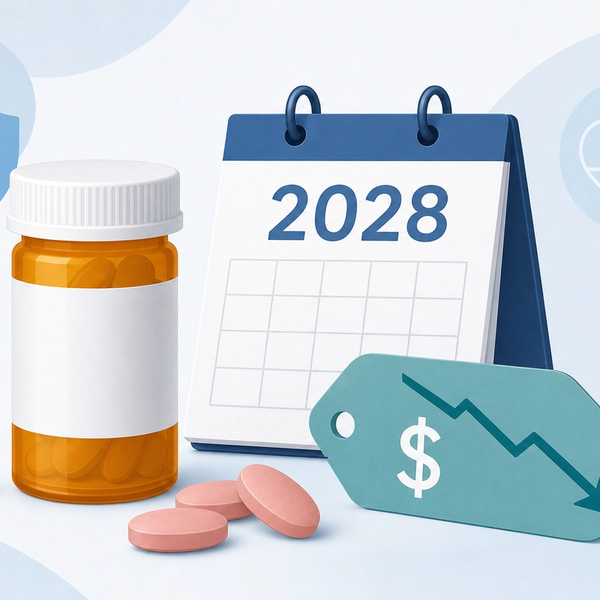
- Generic apixaban is FDA-approved but blocked from U.S. pharmacies by patent settlements until at least April 1, 2028.
- The 2.5 mg and 5 mg tablets cost about the same, so a lower dose doesn't mean a lower bill.
- Cash-pay routes are where the biggest gap is: brand Eliquis runs $199.99 for 180 tablets through CanAmerica Plus — roughly $67 per 30 days.
How much does Eliquis cost in 2026?
The list price set by Bristol Myers Squibb is $346 for a 30-day supply — 60 tablets, which is what a standard 5 mg twice-daily prescription works out to. That's the anchor everything else is measured against.
At the pharmacy counter, cash-paying customers generally see something close to it. Drugs.com puts the 5 mg tablet at about $345.47 for 60 tablets, or $5.76 each. Chain pharmacies land a bit above or below depending on your ZIP code and their contracted markup.
| What you're paying | 30-day cost (60 × 5 mg) | Per tablet | Who it applies to |
|---|---|---|---|
| Manufacturer list price | $346 | $5.77 | Reference price |
| Typical retail cash price | $345–$400 | $5.75–$6.65 | Anyone paying cash |
| Free discount coupon at a chain | ~$330–$345 | $5.50–$5.75 | Anyone, not combinable with insurance |
| Medicare Part D negotiated price | $231 | $3.85 | Part D members only |
| Eliquis through CanAmerica Plus | ~$67 ($199.99 per 180 tablets) | ~$1.11 | Cash-pay, prescription required |
Prices verified September 2026. Retail pricing varies by pharmacy and location — confirm before you fill.
Two things jump out of that table. The discount-coupon savings most people assume are enormous are, for this particular drug, fairly modest — coupons work best on generics, and Eliquis doesn't have one yet in the U.S. And the spread between what a U.S. retail counter charges and what a licensed cash-pay channel charges is larger than the spread between any two U.S. pharmacies.
Eliquis cost per month and per year
Nearly everyone on Eliquis takes it twice daily, so a month is 60 tablets and a year is 730. Here's what that looks like across a full year, which is the number that actually matters when you're budgeting:
| Route | Per month | Per year |
|---|---|---|
| U.S. retail cash | ~$350 | ~$4,200 |
| Medicare Part D negotiated price | $231 | $2,772 |
| CanAmerica Plus (brand Eliquis) | ~$67 | ~$800 |
| CanAmerica Plus (generic apixaban) | ~$43 | ~$520 |
The annual view is where the decision usually gets made. A difference of $283 a month is abstract. Three thousand four hundred dollars a year is a car repair, a deductible, or several months of groceries.
Savings tip: Watch the 90-day quantity tier at U.S. retail. Published price lists show 180 tablets of Eliquis 5 mg at roughly $1,651 — about $9.17 per tablet, well above the $5.76 you'd pay filling 60 at a time. On most drugs a 90-day fill saves money. On this one, ask the pharmacy to price three separate 30-day fills before you commit.
Why the $231 Medicare price doesn't help most people
This is the single most misread fact about Eliquis pricing right now.
Under the Inflation Reduction Act, CMS negotiated a maximum fair price of $231 for a 30-day supply, a 56% cut from the 2023 list price. It took effect January 1, 2026. Eliquis was one of the first ten drugs selected, largely because Medicare spends more on it than almost anything else.
But the negotiated price is a Medicare Part D price. If you're uninsured, it does nothing for you. If you have commercial insurance through an employer, it does nothing for you either — your plan negotiates separately, and your copay or coinsurance is set by your formulary tier, not by CMS.
Even Part D members don't all pay $231. What you hand over at the register depends on where you are in your plan's benefit phases and whether you've hit the annual out-of-pocket cap. The $231 is what the plan pays the pharmacy, not automatically what you pay.
So when a headline says Eliquis got 56% cheaper in 2026, the honest translation is: it got 56% cheaper for one specific group of people, and that group probably isn't you if you're reading a page about paying cash.
When will generic Eliquis be available?
Not soon, and the widely circulated dates are misleading.
The FDA approved the first generic versions of apixaban back in December 2019 — Micro Labs and Mylan were first, and the Orange Book now lists more than a dozen approved applications. Approval is done. What's missing is permission to sell.
Patent litigation between Bristol Myers Squibb, Pfizer, and the generic manufacturers ended in settlements that set the earliest U.S. launch date at April 1, 2028. You'll see November 2026 quoted as the patent expiry, and that date is real — it's just the wrong patent. A separate formulation patent, upheld by the Federal Circuit in 2021, is what keeps generics out until 2028.
Practically, that means no U.S. pharmacy will hand you generic apixaban at a generic price before then. Generic apixaban is manufactured and dispensed in Canada and other regulated markets today, which is why cash-pay networks can source it while U.S. shelves stay empty.
If you want the full timeline and what changes when the settlement date arrives, we covered it separately in Eliquis Generic in 2026: When It's Coming & How to Save.
Does Eliquis 2.5 mg cost less than 5 mg?
No — and this trips up a lot of people.
Both strengths are priced almost identically per tablet. Published pricing puts 60 tablets of the 2.5 mg at the same $345.47 as the 5 mg. Since both are dosed twice daily, someone on 2.5 mg twice a day pays essentially what someone on 5 mg twice a day pays.
The 2.5 mg dose is prescribed for specific clinical reasons: patients with atrial fibrillation who meet at least two of three criteria — age 80 or older, body weight of 60 kg or less, or serum creatinine of 1.5 mg/dL or higher — and for extended treatment after a clot has been managed. It is not a budget version.
Do not split 5 mg tablets to make 2.5 mg doses. Eliquis is film-coated, splitting introduces dosing error, and getting the dose wrong on an anticoagulant carries stroke risk on one side and bleeding risk on the other.
Eliquis vs. other blood thinners: what each one costs
If cost is driving the conversation, this is the table to bring to your next appointment. These are not interchangeable drugs — each is approved for a different set of indications, and switching is a clinical decision, not a financial one. But the price differences are large enough to be worth raising.
| Medication | U.S. retail (30 days) | CanAmerica Plus | Notes |
|---|---|---|---|
| Eliquis (apixaban) | ~$346 | $199.99 / 180 tabs | No U.S. generic until 2028 |
| Xarelto (rivaroxaban) | ~$550–$650 | $194.99 / 100 tabs (brand) | Generic launched in the U.S. in 2025 |
| Pradaxa (dabigatran) | ~$460 | $130.99 / 60 caps (brand) | Generic available |
| Warfarin | ~$4–$30 | Varies by strength | Cheapest drug, but requires regular INR testing |
Warfarin deserves an honest caveat. The pills cost almost nothing, but it needs routine INR blood draws, dose adjustments, and dietary consistency around vitamin K. If you're uninsured, factor the lab visits in — a monitoring appointment every few weeks can erase the drug savings, and warfarin isn't the right choice for everyone clinically.
How to lower what you pay for Eliquis
Compare more than two pharmacies. Cash prices for the same 60 tablets can vary by $60 or more within one city. Warehouse club pharmacies frequently price below chains, and in most states you don't need a membership to use the pharmacy counter.
Ask what the cash price is, even if you have insurance. If your plan puts Eliquis on a high coinsurance tier, the cash price can be lower than your copay. Pharmacists can tell you both if you ask directly.
Use a licensed cash-pay network. Services like CanAmerica Plus source brand Eliquis and generic apixaban from licensed pharmacies in regulated markets where the generic is already available. Brand Eliquis runs $199.99 for 180 tablets, generic apixaban $129.99 for 180 — roughly $67 and $43 per 30 days respectively, against $346 at a U.S. counter. A valid prescription is required either way.
Verify who you're buying from. This matters more with anticoagulants than almost any other drug class, because a counterfeit or degraded product means either a clot or a bleed. Look for a pharmacy that requires a prescription, lists a licensed pharmacist, and provides a physical address and a phone number that a human answers. Anything selling apixaban without a prescription should be avoided outright.
Have the alternatives conversation with your prescriber. Not to switch on your own — to find out whether a different anticoagulant is clinically reasonable for your specific indication. For atrial fibrillation there are usually several options. After orthopedic surgery or for certain clot histories, there may not be.
The bottom line
Eliquis costs about $346 for a 30-day supply at a U.S. pharmacy in 2026, and neither the Medicare negotiated price nor the pending generic changes that if you're paying cash. The routes that meaningfully lower the number today are pharmacy shopping, comparing your cash price against your copay, and licensed cash-pay sourcing — where brand Eliquis lands near $67 a month and generic apixaban near $43.
Check the current price for your strength and quantity on the Eliquis page, and bring the cost question to your next appointment rather than rationing doses on your own. Skipping an anticoagulant to stretch a supply is the one option that costs more than all the others.
Frequently asked questions
How much is Eliquis per month without insurance?
Roughly $345 to $400 for a 30-day supply of 60 tablets at U.S. retail pharmacies in 2026, which is about $5.75 to $6.65 per tablet. Discount coupons typically bring that down to around $330–$345. Licensed cash-pay networks are considerably lower — CanAmerica Plus prices brand Eliquis at $199.99 for 180 tablets, roughly $67 per 30 days.
Will Eliquis be cheaper in 2026?
For Medicare Part D members, yes — the negotiated price of $231 per 30-day supply took effect January 1, 2026. For uninsured and commercially insured patients, the list price hasn't dropped, and it isn't expected to until generic competition arrives.
Is generic Eliquis available yet?
No. Generic apixaban has been FDA-approved since December 2019, but patent settlements block U.S. sales until at least April 1, 2028. Generic apixaban is available in other regulated markets, including Canada, which is how cash-pay networks can offer it now.
Does Eliquis cost less at Costco or Walmart?
Sometimes, by modest amounts. Warehouse club pharmacies often price 5–15% under chain pharmacies on brand drugs, and most states require pharmacy access without a membership. It's worth calling both — but on a brand-only drug like Eliquis, the difference is tens of dollars, not hundreds.
What happens if I stop taking Eliquis because of the cost?
Stopping abruptly raises your risk of stroke or a new clot, and the risk is highest in the first weeks after discontinuation. If cost is the reason you're considering it, tell your prescriber that directly — they can look at alternatives, adjust the plan, or point you toward lower-cost sourcing. Never stop an anticoagulant on your own.
This article is for informational purposes only and does not constitute medical advice. Always consult with a qualified healthcare provider for diagnosis and treatment. Pricing information is current as of the publication date but may change. Verify pricing directly before making purchasing decisions.