Gemtesa Cost in 2026: Prices, Generic & Savings
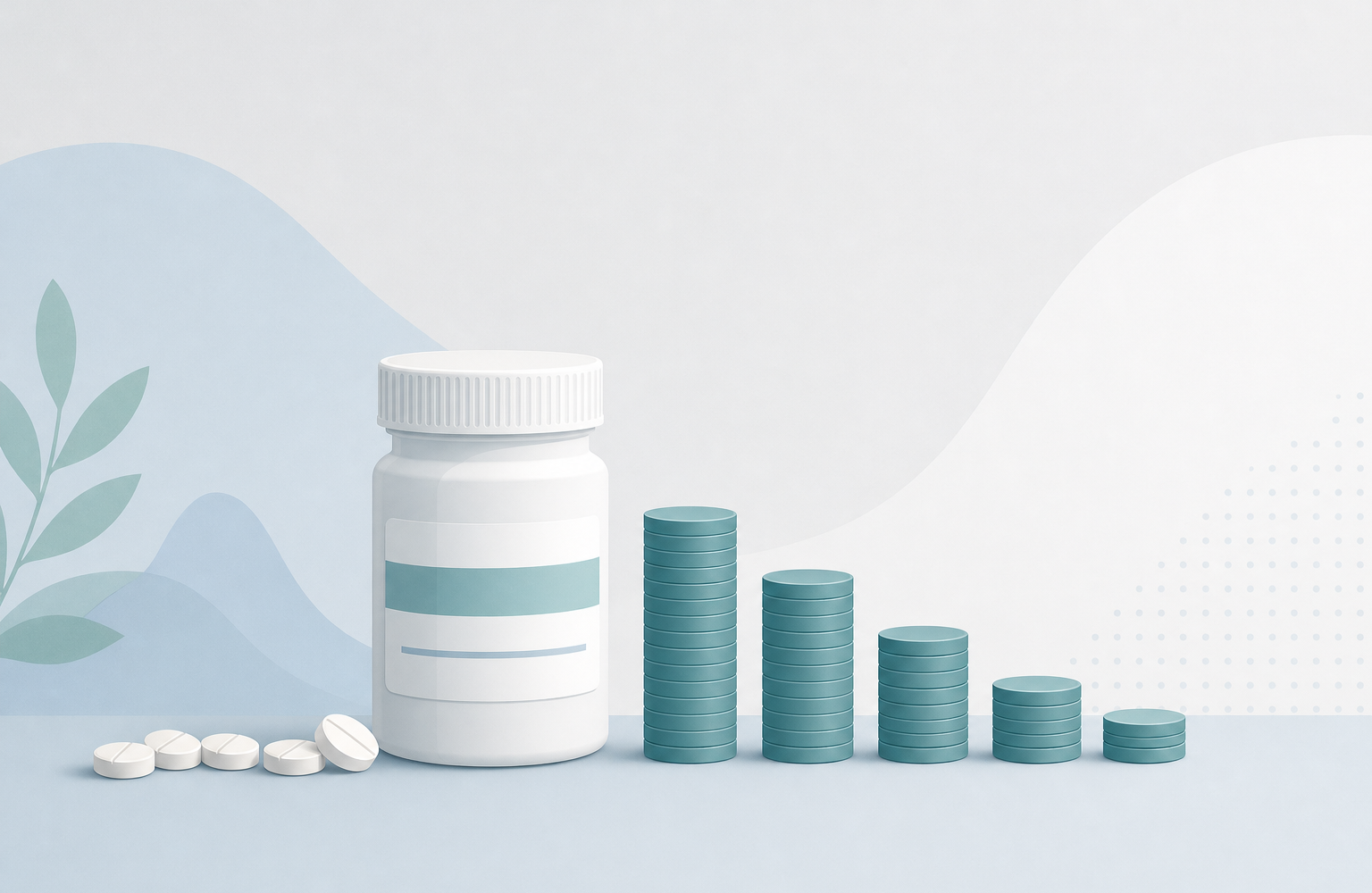
Twenty dollars a pill. That's roughly what one 75 mg tablet of Gemtesa runs at a US pharmacy counter if nobody else is paying — a little over $618 for a month, north of $7,400 a year for a medication you take once a day, every day, indefinitely.
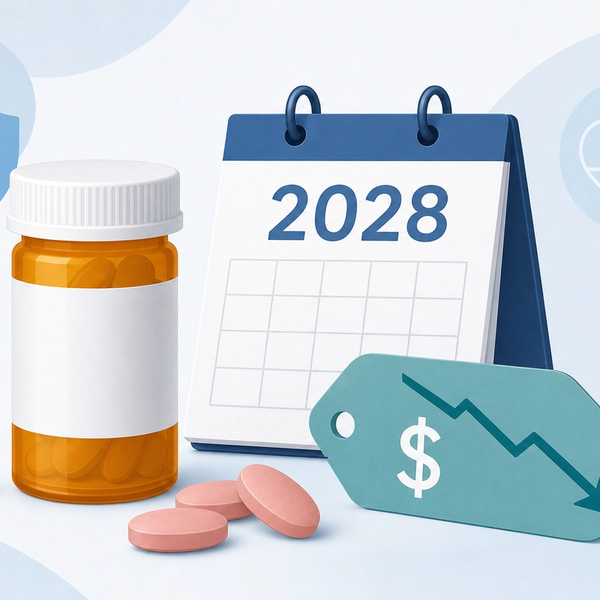
And there's no generic to wait out. Not this year, not next year, and possibly not until the 2030s.
At a glance
- Gemtesa (vibegron) costs about $618–$692 per month at US retail for 30, 75 mg tablets — around $21 to $23 per tablet
- The manufacturer's list price is $500.89 for a 30-day supply; retail markups push the counter price higher
- No generic vibegron is on the US market, and the earliest realistic entry date is April 2029
- Cash-pay pricing through CanAmerica Plus is $129.99 for 30 tablets — roughly 79% below average US retail
- Generic overactive bladder pills cost far less, but the trade-offs matter, especially for adults over 65
How much does Gemtesa cost in 2026?
Sumitomo Pharma America lists the wholesale acquisition cost — the manufacturer's sticker price — at $500.89 for a 30-day supply. That's not what you pay. Wholesalers and pharmacies add their own margin on top, so the average retail cash price lands higher.
As of mid-2026, published averages sit between $618.88 and $692 for 30 tablets depending on which pricing service you check and which ZIP code you're in. GoodRx puts the national average around $618.88 for a one-month supply and about $1,843.99 for 90 days. SingleCare reports closer to $687 to $692 for 30 tablets.
| Supply | Average US retail cash price | Cost per tablet |
|---|---|---|
| 30 tablets (1 month) | $618.88 – $692 | $20.63 – $23.07 |
| 90 tablets (3 months) | ~$1,843.99 | ~$20.49 |
| 365 tablets (1 year) | $7,427 – $8,304 | — |
The 90-day supply trap
Filling 90 days at once usually saves money. Here, it barely does.
Three separate 30-day fills at the national average come to $1,856.64. The 90-day fill averages $1,843.99. That's a difference of about $12.65 — less than 1% — while tying up nearly $1,900 up front. Worth knowing before someone tells you to buy in bulk and call it a savings strategy.
Why is Gemtesa so expensive? No generic until 2029 at the earliest
Gemtesa is a beta-3 adrenergic agonist that relaxes the detrusor muscle so your bladder holds more urine before signaling urgency. The FDA approved it on December 23, 2020 for overactive bladder with urge urinary incontinence, urgency, and urinary frequency in adults. Four years later, on December 23, 2024, the FDA expanded the label to include men with OAB symptoms who are already on drug therapy for benign prostatic hyperplasia — the first beta-3 agonist cleared for that group.
Five patents currently protect the drug, and there has been one Paragraph IV challenge from a would-be generic manufacturer. Patent analysts put the earliest possible generic vibegron entry at April 2, 2029. Litigation, settlements, and pediatric exclusivity can push that later; several pharmacists tracking the drug expect the early 2030s in practice.
Is there a generic for Gemtesa right now?
No. The FDA has not approved a generic vibegron, and none is sold in the United States.
CanAmerica Plus does list a vibegron page so it's ready when supply exists, but as of July 2026 there is nothing to fill against. Any website advertising "generic Gemtesa" today is selling you something that either isn't vibegron or isn't coming from a licensed source. Verify the pharmacy before you send money anywhere.
If you've watched this play out with other brand-only drugs, the pattern will feel familiar — our breakdown of when the Eliquis generic is actually coming walks through the same patent-cliff math.
Does insurance cover Gemtesa?
Usually — with conditions. National coverage data compiled in January 2026 shows how different plan types handle it:
| Plan type | Enrollees with coverage | Prior authorization required | Step therapy required |
|---|---|---|---|
| Medicaid | 99.9% | 84.2% | 15.5% |
| Medicare (Part D / Advantage) | 66.3% | 0.2% | 0% |
| Commercial (excluding ACA) | 70.8% | 17.3% | 20.7% |
| ACA marketplace | 44.9% | 31.2% | 32.7% |
Two numbers stand out. Medicaid covers nearly everyone but makes your prescriber file paperwork 84% of the time. And ACA marketplace plans — the ones many self-employed and gig workers buy — cover Gemtesa less than half the time.
What step therapy actually costs you
Step therapy means your plan won't pay for Gemtesa until you've tried and failed a cheaper drug first, usually an antimuscarinic like oxybutynin. On paper that's a formulary rule. In practice it's two to three months of taking a medication you and your doctor didn't choose, documenting that it didn't work or that the dry mouth was intolerable, and only then getting approval.
If you're on an ACA plan, there's roughly a one-in-three chance you'll be routed through this. Ask your prescriber's office to start the prior authorization at the same time they write the prescription rather than after the pharmacy rejects it. That alone can save weeks.
If the plan denies coverage, you can request a formulary exception and appeal a denial. Your prescriber's office handles most of the paperwork, and appeals succeed more often than people assume.
Gemtesa cash-pay price through CanAmerica Plus
Through the CanAmerica Plus network, Gemtesa 75 mg is $129.99 for 30 tablets — about $4.33 per tablet, or roughly $1,560 a year.
Set against the $618.88 national retail average, that's $488.89 less per month and about $5,867 less per year, a reduction of roughly 79%. Against the higher $692 figure, the gap widens to about 81%.
| Route | 30-day cost | Annual cost |
|---|---|---|
| US pharmacy, cash price | $618.88 – $692 | $7,427 – $8,304 |
| US pharmacy with a discount card | ~$442 – $510 | $5,304 – $6,120 |
| CanAmerica Plus cash-pay | $129.99 | ~$1,560 |
A prescription from a US-based provider is still required, and pricing is current as of July 2026. This is one route among several — for some people insurance with a manageable copay will still be the cheapest option, and it's worth pricing both before you decide. Our longer piece on why cash-pay care sometimes beats insurance covers how to run that comparison.
Savings tip: Before you fill anything, ask the pharmacy for the cash price and the insured price separately. On brand-only drugs with high deductibles, the cash price is sometimes lower than what your plan would charge you — and pharmacists can't always volunteer that unless you ask.
Gemtesa vs Myrbetriq and other overactive bladder medications
Gemtesa isn't the only option, and the price spread across OAB drugs is enormous. Here's how the main alternatives compare on cost.
| Medication | Drug class | US retail (approx.) | CanAmerica Plus price |
|---|---|---|---|
| Gemtesa (vibegron) | Beta-3 agonist | $618–$692 / 30 tabs, 75 mg | $129.99 / 30 tabs |
| Myrbetriq (mirabegron ER) | Beta-3 agonist | $625 / 30 tabs, 50 mg | $129.99 / 100 tabs |
| Vesicare / solifenacin | Antimuscarinic | $394–$479 / 30 tabs, 10 mg | $73.99 / 100 tabs |
| Toviaz (fesoterodine ER) | Antimuscarinic | $409–$475 / 30 tabs, 8 mg | $99.99 / 30 tabs |
| Detrol LA / tolterodine LA | Antimuscarinic | $203 / 60 tabs, 2 mg | Ask for current pricing |
| Trospium chloride | Antimuscarinic | $194 / 60 tabs, 20 mg | $67.99 / 60 tabs |
| Oxybutynin ER | Antispasmodic | $104–$105 / 30 tabs, 10 mg | Not currently listed |
Myrbetriq is the closest clinical match — same beta-3 mechanism, same once-daily dosing. A generic mirabegron ER arrived in 2024, which is why it's now the cheapest way to stay in this drug class at a US pharmacy. If your plan covers mirabegron but not Gemtesa, that's a conversation worth having with your prescriber.
The cheap alternative nobody wants to talk honestly about
Oxybutynin costs about a hundred dollars a month retail and a fraction of that with a discount card. It's the drug most step-therapy protocols push you toward first, and for plenty of people it works fine.
But antimuscarinics block acetylcholine throughout the body, not just in the bladder. That produces dry mouth, constipation, and blurred vision in a meaningful share of users. More significantly for older adults, observational research has linked high cumulative anticholinergic exposure — oxybutynin is among the worst offenders — with increased dementia risk. Trospium crosses into the brain far less than the others, which is one reason geriatricians reach for it when an antimuscarinic is needed.
Beta-3 agonists like Gemtesa and Myrbetriq don't carry that anticholinergic burden. That's the clinical reason they cost what they do, and it's why "just take the cheap one" isn't automatically the right answer if you're 72 and already on four other medications. Discuss it with your prescriber rather than switching on price alone.
Gemtesa side effects worth knowing before you commit
Spending $600 or even $130 a month on a drug you stop taking in six weeks helps nobody. Know what you're signing up for.
The most common side effects reported in trials were headache, nasopharyngitis (cold-like symptoms), diarrhea, nausea, and upper respiratory tract infection. Most are mild.
The one to watch is urinary retention — trouble emptying your bladder. Risk goes up if you have bladder outlet obstruction, such as an enlarged prostate, or if you're taking an antimuscarinic at the same time. If you can't urinate, that's a same-day call to your doctor.
Gemtesa also raises digoxin levels. If you take digoxin for a heart condition, your prescriber should check levels when starting Gemtesa and adjust the dose accordingly.
Older adults tolerate Gemtesa about as well as younger adults in the published data, which is part of its appeal in the 65-plus population where OAB is most common.
Six ways to lower what you pay for Gemtesa
Price the cash rate before you use insurance. On high-deductible plans, the cash price sometimes wins outright. Ask for both numbers.
Compare across pharmacies, not just chains. Independent pharmacies and grocery-store counters frequently price brand drugs differently than the big chains a mile away.
Ask about a same-class generic swap. Generic mirabegron ER hits the same beta-3 receptor and has been available since 2024. If it works for you, it's the single biggest legitimate saving available at a US pharmacy today.
Check a cash-pay network. Networks like CanAmerica Plus price brand-only drugs well below US retail. You still need a valid prescription from a US-based provider.
Use HSA or FSA dollars. Prescription costs are qualified expenses. Paying with pretax money effectively discounts the bill by your marginal tax rate. Watch FSA expiration dates.
Don't split or ration tablets. Gemtesa comes in one strength, 75 mg, dosed once daily, and the tablets are film-coated. Stretching a supply by skipping days undermines the treatment and there's no lower-dose version to step down to. If the cost isn't sustainable, say so out loud to your prescriber — that's a clinical problem, not just a budgeting one.
Savings tip: Tell your prescriber the actual dollar figure you're facing. Offices see formulary data all day and often know which OAB drug your specific plan covers without a fight. That five-minute conversation beats three months of trial and error at the pharmacy counter.
The bottom line
Gemtesa runs about $618 to $692 a month at US retail in 2026, with no generic vibegron expected before April 2029 at the earliest. Cash-pay pricing through CanAmerica Plus brings that to $129.99 for 30 tablets, and generic OAB alternatives cost less still — though the anticholinergic trade-offs are real, particularly for older adults.
Price both routes before your next refill, and bring the numbers to your prescriber. The cheapest drug that actually controls your symptoms is the one worth paying for.
Frequently asked questions
How much does Gemtesa cost per month without insurance?
Roughly $618 to $692 for 30, 75 mg tablets at an average US pharmacy in 2026, which works out to about $21 to $23 per tablet. Prices vary by pharmacy and ZIP code. Cash-pay pricing through CanAmerica Plus is $129.99 for the same 30-tablet supply.
Is there a generic version of Gemtesa?
Not yet. The FDA has approved no generic vibegron, and five patents still protect the brand. Patent analysts identify April 2, 2029 as the earliest possible generic entry, with the early 2030s more likely once litigation and settlements are factored in.
Is Gemtesa covered by Medicare?
About 66% of Medicare Part D and Medicare Advantage plans covered Gemtesa as of January 2026, and prior authorization requirements are rare on Medicare compared with Medicaid or commercial plans. Coverage and copays vary by plan, so check your plan's formulary directly.
Is Gemtesa better than Myrbetriq?
They work through the same beta-3 mechanism and both are taken once daily. Gemtesa doesn't carry Myrbetriq's blood pressure warning and has fewer drug interactions, while Myrbetriq now has a generic that makes it substantially cheaper at US pharmacies. Which one suits you depends on your other medications and your blood pressure — a decision for your prescriber, not a price chart.
Can I cut Gemtesa tablets in half to make a prescription last longer?
No. Gemtesa is made in a single 75 mg strength, taken once daily, and the tablets are film-coated. There's no studied half-dose. If the cost isn't workable, talk to your prescriber about a different medication rather than rationing this one.
This article is for informational purposes only and does not constitute medical advice. Always consult with a qualified healthcare provider for diagnosis and treatment. Pricing information is current as of the publication date but may change. Verify pricing directly before making purchasing decisions.