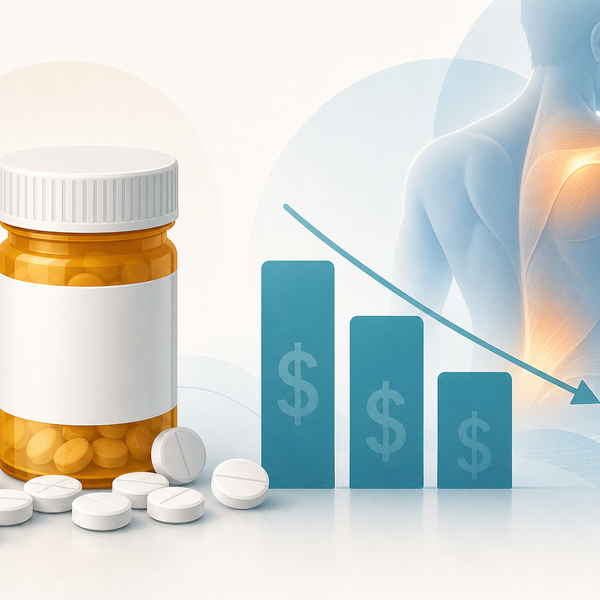
Meloxicam 15 mg: Uses, Side Effects & Cost in 2026
Meloxicam 15 mg: Uses, Side Effects & Cost in 2026
Your doctor wrote 15 mg instead of 7.5 mg, and the pharmacy handed you a bottle without much explanation. Fifteen milligrams is the ceiling for meloxicam — the most an adult is supposed to take in a day — and that matters more than most people realize when they're deciding whether to keep taking it, or whether to split the tablet on a good day.
Here's what the 15 mg dose actually does, what it costs in 2026, and how it stacks up against the other anti-inflammatories your doctor could have picked.
At a glance
- Meloxicam 15 mg is the maximum daily adult dose of a prescription NSAID, taken once a day for osteoarthritis and rheumatoid arthritis
- It usually takes a few hours to dull pain, but two to three weeks to reach full anti-inflammatory effect
- The tablet carries FDA boxed warnings for heart attack, stroke, and stomach bleeding — risk that rises with dose and duration
- Generic meloxicam is one of the cheapest prescriptions in America; brand-name Mobic is not
- On CanAmerica Plus, 100 meloxicam tablets run $56.99 and 90 Mobic tablets run $70.99 as of September 2026
What is meloxicam 15 mg used for?
Meloxicam is a nonsteroidal anti-inflammatory drug, sold under the brand name Mobic and approved by the FDA in 2000. It blocks the enzymes that produce prostaglandins, the chemicals responsible for the swelling, heat, and ache in an inflamed joint.
The FDA-approved uses are narrow:
- Osteoarthritis — the wear-and-tear kind, usually knees, hips, hands, or spine
- Rheumatoid arthritis — the autoimmune kind, where the immune system attacks joint lining
- Juvenile idiopathic arthritis — in children weighing at least 60 kg (about 132 pounds) for the tablet form
Doctors also prescribe it off-label for chronic low back pain, gout flares, tendonitis, and bursitis. That's legal and common, but it's worth knowing when you search "meloxicam 15 mg for back pain" and find conflicting advice — back pain isn't on the label.
What meloxicam is not good at: acting fast. It has a half-life of roughly 15 to 20 hours, which is why you take it once daily, and why it's a poor choice for a headache or a sprained ankle you want fixed this afternoon.
Meloxicam 15 mg dosage for adults
The FDA labeling is unusually specific here, and the numbers are worth memorizing.
| Situation | Starting dose | Maximum daily dose |
|---|---|---|
| Osteoarthritis | 7.5 mg once daily | 15 mg |
| Rheumatoid arthritis | 15 mg once daily | 15 mg |
| Patients on hemodialysis | 7.5 mg once daily | 7.5 mg |
| Juvenile arthritis (≥60 kg) | 7.5 mg once daily | 7.5 mg |
Fifteen milligrams is the hard stop. Taking 15 mg twice a day doesn't produce better pain relief — studies comparing 15 mg to 22.5 mg found more side effects without meaningful added benefit — and it substantially raises your bleeding and cardiovascular risk.
Take it at the same time each day, with or without food. Many people take it with breakfast, partly out of habit and partly because food can take the edge off stomach upset.
When 7.5 mg is the better call
If you're over 65, have reduced kidney function, weigh under about 110 pounds, or take a blood thinner, the lower dose is often the smarter starting point. Guidelines for NSAIDs in older adults consistently push toward the lowest effective dose for the shortest necessary period, and meloxicam is no exception. Ask your prescriber whether 7.5 mg controls your symptoms before assuming you need the full 15.
How long does meloxicam 15 mg take to work?
Two different timelines, and confusing them is why people quit early.
Pain relief starts within a few hours of the first dose. Peak blood levels hit around 4 to 5 hours.
The anti-inflammatory effect — the part that actually reduces joint swelling and morning stiffness — builds over time. Most people notice meaningful improvement by the end of week one and close to full benefit somewhere between two and three weeks. If you've taken it for three weeks with no real change, that's useful information for your doctor, not a reason to double up.
Meloxicam 15 mg side effects
Common, and usually manageable:
- Stomach upset, nausea, heartburn
- Diarrhea or constipation
- Dizziness or headache
- Swelling in the ankles, feet, or hands
- A modest rise in blood pressure
That last one is easy to miss. NSAIDs cause fluid retention and can push systolic blood pressure up by several points. If you're already on blood pressure medication, it's reasonable to check your numbers a few weeks after starting.
The serious ones
Meloxicam carries two FDA boxed warnings — the agency's strongest.
Cardiovascular. NSAIDs increase the risk of heart attack and stroke, and that risk can appear in the first weeks of use. It climbs with higher doses and longer use. Meloxicam is absolutely contraindicated around coronary artery bypass graft surgery.
Gastrointestinal. Serious stomach and intestinal bleeding, ulceration, and perforation can happen without any warning symptoms at all. Adults over 65, people with a prior ulcer, and anyone taking corticosteroids, anticoagulants, or SSRIs carry higher risk.
Call your doctor right away for black or tarry stools, vomit that looks like coffee grounds, chest pain or shortness of breath, sudden weakness on one side, unusual weight gain or swelling, or yellowing of the skin or eyes.
Safety note: Never take meloxicam alongside ibuprofen, naproxen, or aspirin for pain. Doubling up on NSAIDs multiplies bleeding risk without adding relief. If you need low-dose aspirin for your heart, tell your prescriber — that combination needs a deliberate plan, not a guess.
15 mg of meloxicam equals how much ibuprofen?
This question gets asked constantly, and the honest answer is that there's no official conversion. Different NSAIDs bind different enzymes with different strengths, and the FDA has never published an equivalence table.
What the clinical trials suggest: in osteoarthritis studies, meloxicam 15 mg daily produced pain relief broadly comparable to ibuprofen at 1,200–2,400 mg per day (split into three or four doses) or naproxen at about 1,000 mg per day. So one small tablet is doing the work of a handful of ibuprofen — which is the main practical appeal, along with once-daily dosing.
The trade-off is that a long-acting drug is also a long-acting problem if you react badly to it. Ibuprofen clears your system in a few hours. Meloxicam takes the better part of a day.
Meloxicam vs other prescription anti-inflammatories
| Medication | Typical dosing | Cash price at CanAmerica Plus | Notes |
|---|---|---|---|
| Meloxicam (generic) | 7.5–15 mg once daily | $56.99 / 100 tablets | Preferential COX-2 action; once daily |
| Mobic (brand) | 7.5–15 mg once daily | $70.99 / 90 tablets | Identical active ingredient to generic |
| Celecoxib (generic) | 100–200 mg once or twice daily | $55.99 / 100 capsules | Selective COX-2; gentler on the stomach, same heart warnings |
| Celebrex (brand) | 100–200 mg once or twice daily | $92.99 / 120 capsules | Brand version of celecoxib |
| Voltaren Emulgel | Applied to the skin | $37.99 / 100 g | Topical; far lower systemic exposure |
Prices verified September 2026 and subject to change. If stomach tolerance is your main problem, celecoxib — generic Celebrex — is the usual alternative your doctor will consider, though it carries the same cardiovascular warnings. For pain confined to one knee or one hand, a topical NSAID like Voltaren delivers the drug where it's needed with a fraction of the systemic exposure. Worth raising if you're nervous about the boxed warnings.
How much does meloxicam 15 mg cost in 2026?
Straight talk: generic meloxicam is one of the cheapest prescriptions in the United States. At most US retail pharmacies, a 30-day supply of generic 15 mg tablets runs somewhere in the range of $5 to $25 cash, and discount programs often land it under $10. If that's the price in front of you, take it.
Where the math changes:
Brand-name Mobic. If your prescription is written brand-necessary, the US retail price is dramatically higher than the generic — often several hundred dollars for a month. At $70.99 for 90 tablets through CanAmerica Plus, the brand becomes roughly the cost of a cheap generic.
Ninety- and hundred-count bottles. US pharmacies usually dispense 30 at a time, and you pay a dispensing fee each round. A 100-count bottle of meloxicam at $56.99 works out to about $17 per month of 15 mg dosing, shipped, with no repeat trips.
Bundled prescriptions. Most people taking meloxicam long term are taking something else too — a stomach protectant like omeprazole or pantoprazole, a blood pressure pill, a statin. The savings on a cash-pay order compound across the whole list, not the meloxicam alone.
Savings tip: Ask your prescriber to write for 90 or 100 tablets rather than 30. One dispensing fee instead of three, fewer pharmacy trips, and the per-tablet price almost always drops. This applies whether you fill locally or through a cash-pay network.
How long can you take meloxicam 15 mg?
There's no fixed expiration date on a meloxicam prescription, and plenty of people with rheumatoid arthritis take it for years under supervision. But the FDA's guidance is clear that NSAIDs should be used at the lowest effective dose for the shortest duration consistent with your treatment goals, because both the heart and stomach risks accumulate with exposure.
Practical version: if you're on it long term, you should be getting periodic blood pressure checks and bloodwork for kidney function and signs of blood loss. If your doctor hasn't ordered either in the past year, ask.
If you're taking it for an acute flare, a few weeks is usually the intended window, not an open-ended refill.
The bottom line
Meloxicam 15 mg is a well-established, once-daily anti-inflammatory that works well for arthritis pain — and it's the maximum dose, not a starting point, which is why the safety conversation matters. Talk to your prescriber about whether 7.5 mg does the job, whether a topical option fits your pain pattern, and whether you need stomach protection alongside it.
On cost, generic meloxicam is genuinely cheap almost everywhere in the US. Where a cash-pay route like CanAmerica Plus earns its keep is on brand-name Mobic, larger quantities, and the other prescriptions filling the same bag.
Frequently asked questions
Is meloxicam a strong painkiller?
It's a moderately potent anti-inflammatory rather than a strong analgesic. It's not an opioid and it doesn't work like one. For inflammatory joint pain it's effective; for acute injury pain or a headache, faster-acting options generally serve better.
What's the best time of day to take meloxicam 15 mg?
Whatever time you'll remember consistently. Because it lasts roughly a full day, timing matters less than consistency. If morning stiffness is your worst symptom, some people find an evening dose helps them wake up more comfortable — worth asking your prescriber about.
Can I take meloxicam 15 mg every other day?
Only if your prescriber tells you to. Skipping days undercuts the steady drug level that produces the anti-inflammatory effect. If you're stretching doses because of cost, say so — there's usually a cheaper path that doesn't involve under-treating.
What's the difference between meloxicam and Mobic?
None, chemically. Mobic is the brand name; meloxicam is the same active ingredient in generic form. The FDA requires generics to be bioequivalent. The difference is price, and it can be substantial.
Can I drink alcohol while taking meloxicam?
Alcohol raises the risk of stomach bleeding on any NSAID, and meloxicam is no exception. Occasional light drinking is a conversation to have with your doctor; regular or heavy drinking while on meloxicam is a real risk, not a theoretical one.
This article is for informational purposes only and does not constitute medical advice. Always consult with a qualified healthcare provider for diagnosis and treatment. Pricing information is current as of the publication date but may change. Verify pricing directly before making purchasing decisions.