Plavix Generic: Clopidogrel Cost & How to Save in 2026
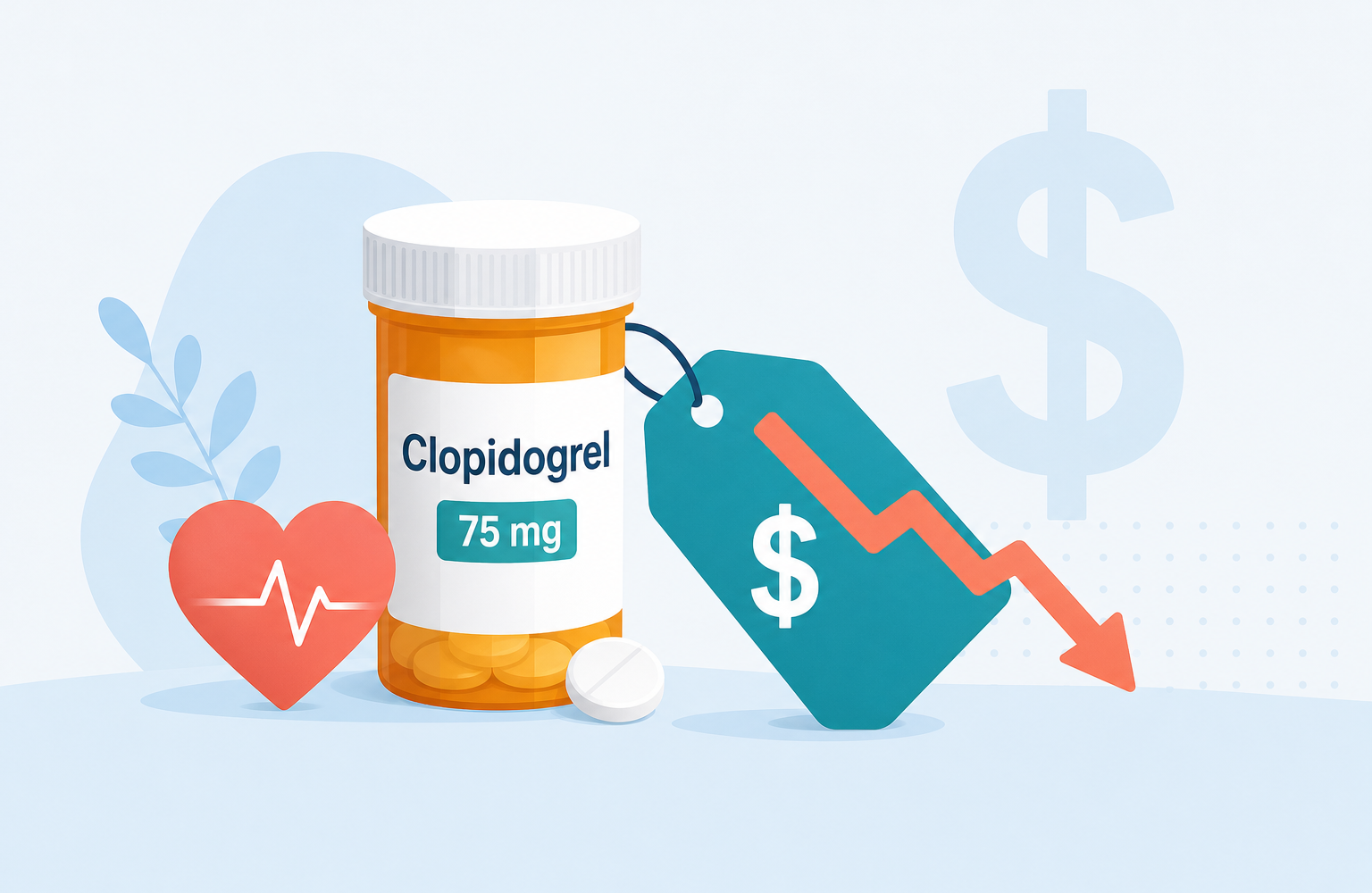
If you're still filling brand-name Plavix, you may be paying around $960 for a 90-day supply — for a medication that has had an FDA-approved generic since 2012. The Plavix generic, clopidogrel, treats the same conditions, at the same dose, for as little as $0.60 per tablet through cash-pay channels.
That gap surprises a lot of people. Here's exactly what the generic is, what it costs in 2026, and how to pay the least for it — with or without insurance.
At a glance
- The Plavix generic is clopidogrel (clopidogrel bisulfate), widely available in the US since May 2012
- Brand-name Plavix runs about $960 for 90 tablets at US retail pharmacies without insurance
- Generic clopidogrel costs about $59.99 for 100 tablets through CanAmerica Plus — roughly 94% less than brand-name retail
- The FDA requires generics to be bioequivalent: same active ingredient, same dose, same clinical effect
- A small group of people metabolize clopidogrel poorly (CYP2C19 gene variants) — worth discussing with your doctor
What is the generic for Plavix?
The generic name for Plavix is clopidogrel — you'll see it on pharmacy labels as clopidogrel bisulfate. Plavix is the original brand, developed by Sanofi and Bristol-Myers Squibb and FDA-approved in 1997. When the patent expired in May 2012, the FDA approved several generic versions of clopidogrel on the same day, and prices dropped fast.
Clopidogrel is an antiplatelet medication, not a traditional anticoagulant. It blocks the P2Y12 receptor on platelets, which keeps them from clumping together into clots. Doctors prescribe it after a heart attack or stroke, for acute coronary syndrome, for peripheral artery disease, and after stent placement — often alongside low-dose aspirin.
The standard dose is one 75 mg tablet daily. Some situations call for a one-time 300 mg loading dose, typically in a hospital setting.
Is generic clopidogrel as good as brand-name Plavix?
Yes — and this isn't just marketing from generic manufacturers. To win FDA approval, a generic must be bioequivalent to the brand: the same active ingredient, in the same strength, absorbed by your body in the same way.
The clinical evidence backs it up. A nationwide cohort study published in Clinical and Translational Science in 2023 followed heart attack patients for two and a half years and found generic clopidogrel performed as well as brand-name Plavix for preventing repeat cardiovascular events, with no difference in safety. An earlier study in Circulation: Cardiovascular Quality and Outcomes reached the same conclusion at one year.
The differences that do exist are cosmetic. Brand-name Plavix is a round pink tablet; generics vary in shape and color depending on the manufacturer. Inactive ingredients (dyes, fillers) can differ too. Unless you have a specific allergy to one of those inactive ingredients, the generic works the same way.
Fourteen years after generic entry, brand-name Plavix prescriptions are rare. Most pharmacists will substitute the generic automatically unless your prescriber writes "do not substitute."
How much does generic Plavix cost in 2026?
Here's what the numbers actually look like right now:
| Brand-name Plavix (75 mg) | Generic clopidogrel (75 mg) | |
|---|---|---|
| US retail price without insurance | ||
| CanAmerica Plus cash price | $302.99 for 90 tablets (~$3.37/tablet) | $59.99 for 100 tablets (~$0.60/tablet) |
| Typical monthly cost | $101–$320 | $18–$175 |
Prices as of July 2026. Retail prices vary by pharmacy and region.
Two things stand out. First, the generic is dramatically cheaper than the brand everywhere. Second, even for a generic, US retail cash prices vary wildly — some pharmacies still charge over $100 per month for clopidogrel, while the same 75 mg tablets cost about $18 per month through CanAmerica Plus.
Over a year, that spread matters. At $175 per 30 tablets retail, a year of clopidogrel costs about $2,100. At $59.99 per 100 tablets, it's about $219. Same medication.
Savings tip: Clopidogrel is usually a long-term medication, so buy in larger quantities when you can. A 100-tablet supply costs less per dose than three separate 30-day fills, and you make fewer trips to refill.
Why is brand-name Plavix still so expensive?
Drug makers don't lower brand prices when generics arrive — they typically keep raising them, because the only people still filling the brand either specifically need it or have insurance covering it. Brand-name Plavix at US retail has climbed to roughly $640 for 30 tablets.
A few people do still take the brand: those with documented reactions to inactive ingredients in available generics, or those whose prescriber has a specific clinical reason to write "dispense as written." If that's you, you don't have to accept the $640 retail price. Cash-pay access through CanAmerica Plus brings brand-name Plavix to $302.99 for 90 tablets — about a third of typical US retail.
The CYP2C19 issue: when clopidogrel may not work well
This is the one clinical wrinkle worth knowing about, and most cost-focused articles skip it entirely.
Clopidogrel is a prodrug — it's inactive when you swallow it, and a liver enzyme called CYP2C19 converts it into its active form. Roughly 2–14% of people (the rate varies by ancestry) carry gene variants that make them "poor metabolizers." For them, clopidogrel produces a weaker antiplatelet effect, and the FDA has had a boxed warning about this since 2010.
A few practical points:
- This applies equally to brand-name Plavix and generic clopidogrel — switching between them won't change how you metabolize the drug
- Genetic testing can identify poor metabolizers; some cardiologists order it routinely after stent placement
- If testing shows you're a poor metabolizer, alternatives like ticagrelor or prasugrel don't depend on CYP2C19
If you've had a clotting event while taking clopidogrel as prescribed, ask your cardiologist whether CYP2C19 testing makes sense for you.
Common drug interactions to watch
Because clopidogrel needs CYP2C19 activation, medications that inhibit that enzyme can blunt its effect. The best-documented offenders are the acid reducers omeprazole (Prilosec) and esomeprazole (Nexium). If you need a PPI for reflux while on clopidogrel, pantoprazole is generally considered the safer pairing — but make that switch with your prescriber, not on your own.
Bleeding risk also rises when clopidogrel is combined with NSAIDs (ibuprofen, naproxen), warfarin or other anticoagulants, and SSRIs or SNRIs. None of these combinations is automatically off-limits — plenty of people take clopidogrel plus aspirin by design — but your prescriber should know everything you're taking.
Alternatives to clopidogrel and what they cost
If clopidogrel isn't right for you, several other antiplatelet and anticoagulant options exist. Costs differ enormously:
| Medication | Class | Generic available? | Cash price through CanAmerica Plus |
|---|---|---|---|
| Clopidogrel (Plavix) | P2Y12 antiplatelet | Yes | $59.99 / 100 tablets |
| Brilinta (ticagrelor) | P2Y12 antiplatelet | US generic recently emerging | $138.99 / 60 tablets |
| Effient (prasugrel) | P2Y12 antiplatelet | Yes | Ask about availability |
| Xarelto (rivaroxaban) | Anticoagulant (factor Xa) | Yes | Generic from $109.99 / 120 tablets |
| Eliquis (apixaban) | Anticoagulant (factor Xa) | Yes | Generic from $129.99 / 180 tablets |
These aren't interchangeable — antiplatelets and anticoagulants treat different clotting problems, and the right choice depends on your diagnosis. But if cost is pushing you toward or away from a particular option, bring these numbers to your appointment. We've covered the Xarelto generic and how to save on Eliquis in detail separately.
How to pay less for clopidogrel
A few strategies, roughly in order of impact:
Take the generic unless there's a reason not to. This one step cuts the price by 70–90% versus brand at any pharmacy.
Compare cash prices even if you have insurance. Copays for clopidogrel are usually low, but not always — some plans charge $20–$40 per month for a drug that costs $18 cash through CanAmerica Plus. Paying cash outside your insurance is allowed, and for cheap generics it sometimes wins.
Buy 90–100 days at a time. Per-tablet prices drop at larger quantities, and clopidogrel is typically taken for a year or more after a stent, often indefinitely for other conditions.
Use a cash-pay service for the brand if you truly need it. Brand-name Plavix at $302.99 for 90 tablets through CanAmerica Plus beats US retail by more than $650 per fill.
Savings tip: Never stop or stretch clopidogrel doses to save money — stopping abruptly after a stent or recent heart attack sharply raises clot risk. If cost is forcing you to skip doses, that's exactly the moment to switch to a cheaper source of the same medication, not to ration it.
The bottom line
Generic clopidogrel is one of the clearest wins in prescription savings: bioequivalent to Plavix, backed by long-term outcome studies, and available for about $0.60 per tablet through cash-pay channels — versus roughly $10.67 per tablet for brand-name Plavix at US retail. Check the clopidogrel price at CanAmerica Plus, compare it with your current copay, and talk to your doctor before making any change to how you take it.
Frequently asked questions
Is Plavix a blood thinner or an anticoagulant?
Plavix (clopidogrel) is an antiplatelet drug — one of the two families people call "blood thinners." It stops platelets from clumping together. Anticoagulants like Eliquis, Xarelto, and warfarin work differently, by blocking clotting proteins in the blood. Both reduce clots; they're used for different conditions.
What is the generic name for Plavix?
Clopidogrel, dispensed as clopidogrel bisulfate. It has been available in the US since May 2012 and is made by multiple manufacturers.
How much does clopidogrel cost without insurance?
US retail cash prices average around $175 for 30 tablets of 75 mg clopidogrel, though some pharmacies charge much less. Through CanAmerica Plus, 100 tablets cost $59.99 — about $18 per month.
What is the most common side effect of Plavix and clopidogrel?
Bleeding more easily than normal: nosebleeds, bleeding gums, easy bruising, and longer bleeding from cuts. Contact your doctor promptly for signs of serious bleeding — blood in urine or stool, black tarry stools, or vomit that looks like coffee grounds.
When is the best time to take clopidogrel?
Any consistent time of day works — clopidogrel can be taken with or without food. What matters is taking it at the same time every day and never stopping without your prescriber's guidance.
How long do people stay on Plavix or clopidogrel?
It depends on why you take it. After a stent, dual antiplatelet therapy commonly runs 6–12 months, sometimes longer. For stroke prevention or peripheral artery disease, treatment is often indefinite. Your cardiologist sets the timeline — don't shorten it on your own.
This article is for informational purposes only and does not constitute medical advice. Always consult with a qualified healthcare provider for diagnosis and treatment. Pricing information is current as of the publication date but may change. Verify pricing directly before making purchasing decisions.