Zepbound vs Mounjaro 2026: Same Drug, Cost & How to Save
Zepbound vs Mounjaro 2026: Same Drug, Cost & How to Save
You got a prescription for Zepbound. Your neighbor takes Mounjaro. You compare notes and realize the pens look almost identical — same manufacturer, same weekly shot, same nausea in week two. So why the different names, and why is one of them so much harder to get covered?
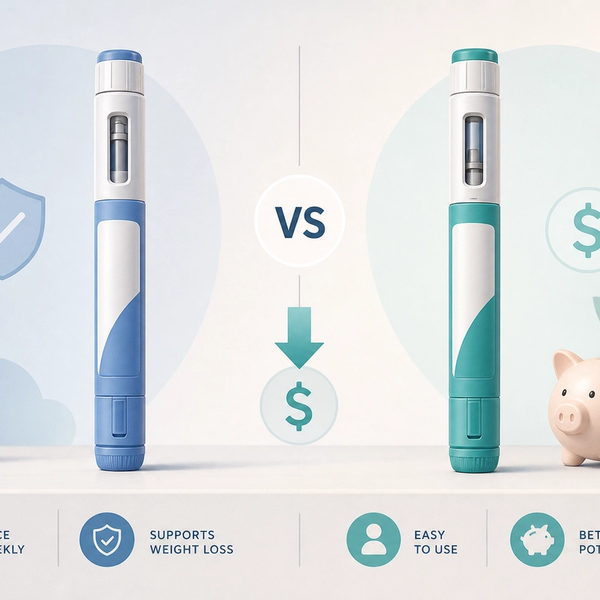
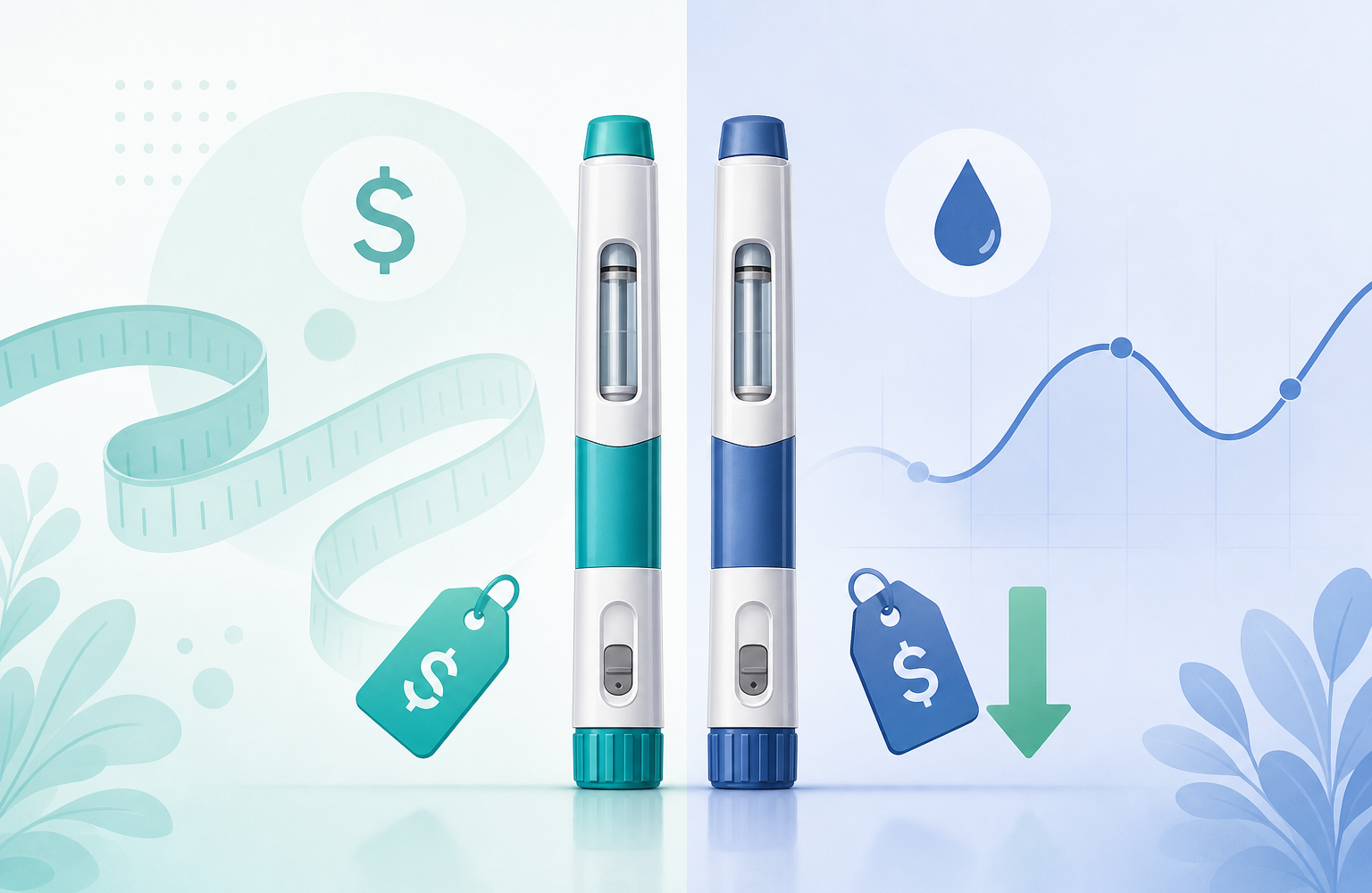
Here's the short version: Zepbound and Mounjaro are the same medication. Same active ingredient, same dose strengths, same effect on your body. What changes is the label on the box, the condition it's approved to treat, and — for a lot of people — what you actually pay at the counter.
At a glance
- Zepbound and Mounjaro both contain tirzepatide, made by Eli Lilly, and work exactly the same way in the body.
- Mounjaro is FDA-approved for type 2 diabetes; Zepbound is approved for chronic weight management and obstructive sleep apnea.
- Without insurance, both carry a list price near $1,000–$1,090 for a month's supply, and no generic exists yet.
- Insurance usually covers Mounjaro (a diabetes drug) far more easily than Zepbound (a weight-loss drug), which changes what you pay out of pocket.
- Cash-pay options — including CanAmerica Plus and Lilly's own self-pay vials — can bring the real cost down well below the sticker price.
Are Zepbound and Mounjaro the same thing?
Molecularly, yes. Both Zepbound and Mounjaro are brand names for tirzepatide, a once-weekly injection from Eli Lilly. Tirzepatide is the shared active ingredient, and the two brands are the tirzepatide products most people are asking about when they search "tirzepatide brand names."
That's the answer to the question people type most often — is Mounjaro the same as Zepbound? The drug inside is identical. If you lined up a 10 mg Mounjaro pen next to a 10 mg Zepbound pen, the tirzepatide delivered would be the same.
So why two names? Lilly split tirzepatide into two brands so it could be approved, marketed, and covered for two different conditions. Mounjaro came first, cleared by the FDA on May 13, 2022, for type 2 diabetes. Zepbound followed on November 8, 2023, for weight management, and picked up a second approval for obstructive sleep apnea in December 2024. The difference between Zepbound and Mounjaro isn't in the vial — it's in the paperwork around it.
How tirzepatide works
Tirzepatide activates two gut hormone receptors, GIP and GLP-1. Together, they:
- Trigger insulin release when your blood sugar climbs
- Slow how fast your stomach empties, so you feel full longer
- Lower the amount of glucose your liver dumps into your blood
- Turn down appetite signals in the brain
That dual action is why the same molecule can both control blood sugar and drive meaningful weight loss. It's also why the side effects overlap so closely — more on that below.
What each one is approved for
The two brands actually diverge here.
| Zepbound | Mounjaro | |
|---|---|---|
| Active ingredient | Tirzepatide | Tirzepatide |
| FDA-approved for | Chronic weight management; obstructive sleep apnea | Type 2 diabetes (adults and kids 10+) |
| Who it's for | Adults with obesity, or overweight with a related condition | People with type 2 diabetes |
| Dosing | Once weekly, injected under the skin | Once weekly, injected under the skin |
| Available as | Single-dose pens and vials | Single-dose pens and vials |
| Generic available | No | No |
If you're being treated for diabetes, your prescriber will almost always reach for Mounjaro. If the goal is weight loss or you've been diagnosed with obesity-related sleep apnea, Zepbound is the on-label choice. Prescribing the "wrong" brand for your condition is the fastest way to get a coverage denial, so the label match matters more than most people expect.
Do they work equally well?
Since the drug is the same, the results track together.
For weight loss, Lilly's SURMOUNT trials found people taking the 15 mg dose lost about 20.9% of their body weight over 72 weeks — with some analyses landing even higher, around 22.5%. In those studies, roughly 9 in 10 participants lost at least 5% of their weight. Those numbers come from tirzepatide, which means they apply whether the box says Zepbound or Mounjaro.
For blood sugar, the SURPASS diabetes trials showed A1C reductions of roughly 1.5% to 2.4%, depending on dose. Strong results, and again, a property of the molecule rather than the brand.
The practical takeaway for anyone asking which is better, Mounjaro or Zepbound: neither is more effective than the other. Same ingredient, same outcomes. The "better" choice is whichever one your diagnosis and your wallet point you toward.
Zepbound vs Mounjaro side effects
The side effect profiles are nearly interchangeable because — you guessed it — the drug is the same. The most common complaints for both are gastrointestinal:
- Nausea
- Diarrhea
- Constipation
- Vomiting
- Stomach pain
- Reduced appetite
Nausea is the one people notice most, especially in the first few weeks and after each dose increase. Reported rates run anywhere from about 12% to nearly 30% across studies. It usually eases as your body adjusts.
Both brands carry the same serious warnings, including a boxed warning about a risk of thyroid C-cell tumors seen in animal studies. Neither should be used by anyone with a personal or family history of medullary thyroid carcinoma or Multiple Endocrine Neoplasia syndrome type 2. Both also list risks of pancreatitis, gallbladder problems, kidney injury from dehydration, and, in people with diabetes, worsening diabetic retinopathy.
Safety note: Because Zepbound and Mounjaro are the same drug, they should never be taken together — doing so would be double-dosing tirzepatide. If you're switching from one to the other, your prescriber will move you across at a matching dose, not add a second product.
How much do Zepbound and Mounjaro cost without insurance?
Here's where the two brands feel very different, even though the medicine doesn't.
Both sit near the same list price. Mounjaro's list price is about $1,079.77 for a 28-day supply, and it's the same across every dose strength. Zepbound's list price lands in the same neighborhood — roughly $1,067 to $1,086 for a month of pens. Discount-card prices at the pharmacy shave only a little off, often still landing above $1,000. And there's no generic tirzepatide yet, so you can't drop to a cheaper equivalent the way you can with older drugs.
| Cost (no insurance, 1 month) | Zepbound | Mounjaro |
|---|---|---|
| Manufacturer list price | ~$1,067–$1,086 | ~$1,079.77 |
| Typical pharmacy discount-card price | ~$1,000+ | ~$990–$1,050 |
| Manufacturer self-pay vials | From ~$349 (lower doses) | Being added in 2026; price not yet published |
| Cash-pay network (e.g., CanAmerica Plus) | Around $400 per pen recently listed | Check current pricing |
A couple of things stand out on that "zepbound vs mounjaro cost" comparison.
First, Zepbound currently has a clearer discount path than Mounjaro. Lilly sells single-dose Zepbound vials through its own self-pay pharmacy at prices that have started around $349 a month for the lowest dose and stepped up from there, well under the pen list price. Lilly has said it's bringing Mounjaro into a similar self-pay program in 2026, but a firm Mounjaro figure hadn't been published as of mid-2026.
Second, a cash-pay health network can undercut the sticker price on either brand. CanAmerica Plus, for example, has listed Zepbound around $400 for a pen — a fraction of the $1,000-plus list price. Prices move, so check the current number before you order, but the gap between "list price" and "what you can actually pay" is the whole game here.
Why insurance treats them so differently
Same drug, wildly different coverage odds. This trips up a lot of people.
Mounjaro is billed as a diabetes medication, and most insurance plans cover diabetes drugs. If you have a type 2 diabetes diagnosis, Mounjaro often clears prior authorization with your A1C and prior medication history on file.
Zepbound is billed as a weight-loss medication, and a large share of plans simply exclude weight-loss drugs — or require documented BMI, past weight-loss attempts, and a related condition before they'll say yes. The newer sleep apnea approval may open some doors, but coverage for that use is still uneven.
That coverage gap is exactly why so many people end up paying cash for Zepbound even though Mounjaro (the identical drug) might be covered for someone else. It's not that one costs more to make. It's how the benefit is categorized.
Can you switch between them to save money?
It's a common question — people ask about switching from Mounjaro to Zepbound (or the reverse) specifically to chase better pricing or coverage. Because it's the same molecule at the same doses, a switch is usually straightforward from a medical standpoint: your prescriber moves you to the matching strength of the other brand.
What makes it worth doing is almost always coverage or cost, not effectiveness. Someone with diabetes whose plan covers Mounjaro has little reason to pay cash for Zepbound. Someone without diabetes can't get Mounjaro on-label at all, so Zepbound is the appropriate choice — and the self-pay vial route or a cash-pay network becomes the way to make it affordable.
One rule holds no matter what: don't switch, split doses, or stretch pens on your own to save money. Talk to your prescriber first. They can match your dose correctly and make sure the brand fits your diagnosis so a claim doesn't get denied.
Savings tip: Before you pay a four-figure pharmacy price, compare three things: your insurance's out-of-pocket cost, the manufacturer's self-pay vial price, and a cash-pay network price like CanAmerica Plus. For a drug with no generic, the cheapest legitimate route is often whichever cash option is lowest that month — not your pharmacy's standard price.
How Zepbound and Mounjaro compare to other GLP-1 drugs
Tirzepatide isn't the only option in this space, and cost sometimes pushes people to look sideways. Ozempic and Wegovy both contain semaglutide, a single-receptor GLP-1 drug rather than the dual GIP/GLP-1 action of tirzepatide. Head-to-head, tirzepatide has generally produced larger average weight loss, but semaglutide products can be cheaper through some cash channels and may be covered when tirzepatide isn't.
If you're weighing those trade-offs, it's worth reading our deeper comparisons of Zepbound vs Wegovy and Ozempic vs Mounjaro before you decide. The right pick depends on your condition, your insurance, and what you can actually pay.
The bottom line
Zepbound and Mounjaro are the same drug — tirzepatide — sold under two names for two different approvals. Mounjaro is the diabetes brand and the easier one to get covered; Zepbound is the weight-loss and sleep apnea brand and the one people more often pay cash for. Effectiveness and side effects don't change between them.
So the real decision isn't "which works better." It's matching the right brand to your diagnosis and then hunting down the lowest legitimate price. Check your coverage, look at Lilly's self-pay vials, and compare a cash-pay network price through CanAmerica Plus before you commit. If you want the full cost picture on the diabetes side, our Mounjaro cost guide breaks down every option. Talk with your prescriber about which brand fits — and don't assume the pharmacy's first price is the one you have to accept.
Frequently asked questions
Is Zepbound the same as Mounjaro?
Yes, chemically. Both are brand names for tirzepatide made by Eli Lilly, at the same dose strengths and the same weekly injection. They differ only in their FDA-approved uses: Mounjaro for type 2 diabetes, Zepbound for weight management and obstructive sleep apnea.
Which is better for weight loss, Mounjaro or Zepbound?
Neither is more effective, because they're the same drug. The 20.9% average weight loss seen in trials applies to tirzepatide overall. Zepbound is the brand actually approved for weight loss, so it's usually the appropriate on-label choice unless you have diabetes and are prescribed Mounjaro.
Is Zepbound cheaper than Mounjaro?
They have nearly identical list prices, around $1,000–$1,090 a month. In practice, Zepbound has had a clearer discount path in 2026 through Lilly's self-pay vials (starting near $349 for lower doses), while a matching Mounjaro self-pay price hadn't been published as of mid-2026. Cash-pay networks can lower either one.
Can I switch from Mounjaro to Zepbound?
Often yes, since it's the same medication at the same doses — but only with your prescriber's guidance. Switches are usually driven by insurance coverage or cost rather than effectiveness. Your prescriber will match your current dose and confirm the brand fits your diagnosis so your claim isn't denied.
Do Zepbound and Mounjaro have the same side effects?
Essentially, yes. Both most commonly cause nausea, diarrhea, constipation, vomiting, and stomach pain, and both carry the same boxed warning about a possible risk of thyroid tumors. Side effects come from tirzepatide, so they don't meaningfully differ between the two brands.
This article is for informational purposes only and does not constitute medical advice. Always consult with a qualified healthcare provider for diagnosis and treatment. Pricing information is current as of the publication date but may change. Verify pricing directly before making purchasing decisions.