Trintellix Side Effects: What to Expect in 2026

Trintellix Side Effects: What to Expect in 2026
You filled a prescription for Trintellix, and within a few days your stomach turned on you. Or maybe you're still at the pharmacy counter, looking at a price north of $500 and wondering whether it's worth starting at all. Either way, the questions are the same: what do Trintellix side effects actually feel like, which ones fade, and which ones mean you should call your doctor?
Most people get the same reassurance once they know what to watch for. The most common complaint — nausea — usually settles within a week or two. The serious reactions are rare. And that eye-watering price has more than one workaround.
At a glance
- Nausea is by far the most common side effect, affecting up to 1 in 3 people at the higher dose — and it usually eases within the first one to two weeks.
- Trintellix tends to cause fewer sexual side effects and less weight gain than older antidepressants, though neither risk is zero.
- Serious reactions — serotonin syndrome, unusual bleeding, low sodium, and worsening mood — are uncommon but need prompt medical attention.
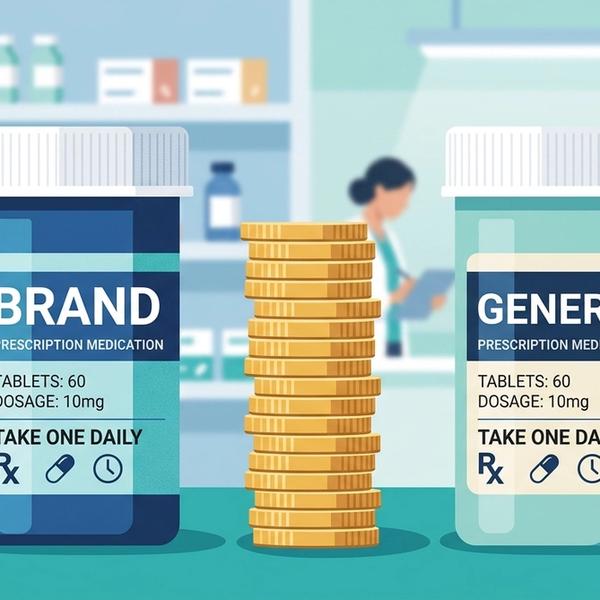
- There's no FDA-approved generic in the U.S. yet, so brand Trintellix runs roughly $500 to $700 a month at retail.
- Cash-pay options bring that down sharply — Trintellix through CanAmerica Plus runs about $117 for a 28-tablet supply as of June 2026.
What is Trintellix, and is it an SSRI?
Trintellix (generic name vortioxetine) is a prescription antidepressant the FDA approved in 2013 for major depressive disorder in adults. It's made by Takeda and Lundbeck, and it's still brand-only in the United States — which is a big part of why it's expensive.
People often lump it in with SSRIs, but technically it isn't one. Vortioxetine is what pharmacologists call a serotonin modulator. It blocks the reuptake of serotonin the way an SSRI does, but it also acts directly on several serotonin receptors. That dual action is the reason its side-effect profile looks a little different from drugs like sertraline or escitalopram — sometimes for the better.
The practical upshot: many people who didn't tolerate a standard SSRI are switched to Trintellix, and some report fewer sexual side effects and clearer thinking. It's approved specifically for depression. Doctors sometimes prescribe it off-label when anxiety rides alongside depression, but anxiety isn't an FDA-approved use on its own.
Standard dosing starts at 10 mg once daily, with a target of 20 mg. Some people stay at 5 or 10 mg if higher doses bother their stomach. It can be taken with or without food, though taking it with a meal often helps with nausea.
The most common Trintellix side effects
Most side effects show up early, are mild to moderate, and improve as your body adjusts. Here's how the common ones break down.
| Side effect | How common | What to know |
|---|---|---|
| Nausea | Very common (up to ~1 in 3 at 20 mg) | Worst in the first 1–2 weeks, usually fades by around week 7 |
| Constipation | Common | Often manageable with fluids and fiber |
| Vomiting | Common | Tends to track with nausea early on |
| Diarrhea | Common | Usually short-lived |
| Dry mouth | Common | Sugar-free gum or sips of water help |
| Dizziness | Less common | Take care standing up quickly |
| Abnormal or vivid dreams | Less common | Often eases over a few weeks |
| Sexual side effects | Variable | Lower than most SSRIs, but not zero |
Nausea: the one almost everyone asks about
Nausea is the side effect that sends people searching. In clinical trials it affected roughly 21% to 32% of people, and the higher your dose, the more likely you are to feel it. The 20 mg dose causes more nausea than the 10 mg.
Two things make it more bearable. First, it's usually front-loaded — strongest in the first week or two, then tapering off. For most people it's largely gone by around the seventh week. Second, it responds to small adjustments: taking the tablet with food, staying hydrated, and eating smaller meals can take the edge off while your body adapts.
If the nausea is severe, comes with vomiting you can't keep ahead of, or simply isn't improving after a few weeks, that's a conversation with your prescriber. Sometimes dropping back to a lower dose for a while solves it.
The other gut-related effects
Constipation, diarrhea, and dry mouth round out the digestive complaints. None of them are dangerous on their own, and they tend to ease with time. Constipation responds to the usual measures — more water, more fiber, movement. Persistent diarrhea, especially if it leaves you dehydrated, is worth flagging.
Does Trintellix cause weight gain?
This is one of Trintellix's quieter advantages. In studies, weight change was minimal — most people don't gain significant weight on it, which sets it apart from antidepressants like mirtazapine or paroxetine that are more strongly linked to weight gain.
That doesn't mean your weight can't change. Appetite, mood, and activity all shift when depression lifts, and those shifts move the scale in either direction. But as antidepressants go, vortioxetine is generally considered weight-neutral over the short to medium term. Long-term data is thinner, so if weight matters to you, it's worth tracking and mentioning at follow-ups.
Sexual side effects of Trintellix
Serotonergic antidepressants can interfere with libido, arousal, and orgasm, and Trintellix is no exception. The difference is degree: rates of sexual dysfunction with vortioxetine tend to run lower than with traditional SSRIs, which is one reason it gets prescribed to people who struggled with that problem on another drug.
In men, that can mean delayed or absent ejaculation, lower desire, or erectile difficulty. In women, reduced desire or trouble reaching orgasm. These effects are real but not universal, and they're often dose-related.
If you notice them, don't just stop the medication — talk to your prescriber. Options range from adjusting the dose to timing strategies to switching agents. Sexual side effects are one of the top reasons people quietly abandon an antidepressant, and they're almost always more fixable than people assume.
Serious side effects and warnings
These are uncommon, but they're the ones to know by name.
Suicidal thoughts in younger people. Like all antidepressants, Trintellix carries the FDA's boxed warning about an increased risk of suicidal thinking and behavior in children, teens, and adults up to age 25, especially in the first months of treatment or after a dose change. Anyone starting it — and the people around them — should watch for worsening mood, agitation, or new thoughts of self-harm.
Serotonin syndrome. This is a rare but potentially life-threatening reaction to too much serotonin activity, more likely when Trintellix is combined with other serotonergic drugs (other antidepressants, certain migraine triptans, tramadol, or the supplement St. John's wort). Warning signs include agitation, confusion, a racing heart, fever, sweating, shivering, muscle stiffness or twitching, and loss of coordination. It's a medical emergency.
Abnormal bleeding. Drugs that act on serotonin can make bleeding more likely, and the risk goes up when Trintellix is taken with NSAIDs (ibuprofen, naproxen), aspirin, or blood thinners. Easy bruising, nosebleeds, or any unusual bleeding deserves a call.
Low sodium (hyponatremia). This shows up most often in older adults and people on diuretics. Symptoms — headache, confusion, weakness, unsteadiness — can be vague, which is exactly why it's easy to miss.
Mania or hypomania. In people who have bipolar disorder, an antidepressant can tip them into a manic episode. This is why prescribers screen for a history of mania before starting any antidepressant.
Eye pressure. Vortioxetine can trigger angle-closure glaucoma in people with narrow drainage angles. Sudden eye pain, redness, or vision changes need urgent attention.
Safety note: Keep an up-to-date list of everything you take — prescriptions, over-the-counter pain relievers, and supplements — and share it with your prescriber and pharmacist. Most serious Trintellix reactions involve a drug interaction that a complete medication list would have caught.
How long do Trintellix side effects last?
For most people, the early side effects are a temporary toll, not a permanent state. Nausea and the other digestive effects are usually at their worst in the first one to two weeks and improve from there, with the bulk of the nausea resolving by roughly week 7. Vivid dreams and dizziness tend to settle over the first few weeks too.
The antidepressant benefit runs on a slower clock. Some people notice improvements in sleep or energy within a couple of weeks, but the full effect on mood typically takes four to six weeks at an effective dose. It's common to feel the side effects before you feel the benefit — which is exactly why so many people stop too early.
One thing not to do: quit cold turkey. Stopping Trintellix abruptly, especially from the 15 or 20 mg dose, can bring on discontinuation symptoms like headache, mood swings, and irritability. If you and your doctor decide to stop, taper down on a schedule rather than dropping it all at once.
Can you drink alcohol while taking Trintellix?
There's no absolute ban, but caution is the honest answer. Alcohol is a depressant, so it can work against the very thing you're treating, and it can stack with Trintellix's dizziness and drowsiness. The label advises avoiding alcohol. If you do drink, keeping it light and seeing how you feel is the sensible approach — and worth a quick word with your prescriber.
How Trintellix compares to other antidepressants
If cost or side effects have you weighing options, it helps to see where Trintellix sits.
Lexapro (generic: escitalopram) is the SSRI many doctors reach for first — well-tolerated, effective, and available as a cheap generic. Zoloft (generic: sertraline) is another widely used, low-cost option. Viibryd (vilazodone) is, like Trintellix, a newer serotonin modulator with its own profile.
Where Trintellix earns its place is the combination of a possibly lower rate of sexual side effects, a roughly weight-neutral profile, and some evidence it helps with the foggy thinking that can come with depression. The trade-off is price. The SSRIs above are all generic and inexpensive; Trintellix is brand-only and runs several hundred dollars a month.
That cost gap is worth a real conversation with your prescriber. For some people, Trintellix is genuinely the better fit and the price is justified. For others, a generic SSRI works just as well for a fraction of the cost. Switching antidepressants isn't something to do on your own — there's a taper, a ramp-up, and a real chance symptoms wobble in between — but cost is a legitimate factor to put on the table.
What Trintellix costs in 2026 — and how to pay less
Trintellix is expensive for one main reason: there's still no FDA-approved generic on the U.S. market. A key patent on vortioxetine is set to expire around June 2026, but additional patents and the usual regulatory timelines mean a true generic likely won't reach pharmacy shelves until 2027 or later. Until then, you're paying brand prices.
At U.S. retail without insurance, that's roughly $500 to $700 for a 30-day supply, depending on the pharmacy. For a maintenance medication you may take for a year or more, the math gets painful fast.
Cash-pay options change that math. Through the CanAmerica Plus cash-pay network, Trintellix runs about $117 for a 28-tablet supply as of June 2026 — a fraction of typical brand retail. And if you and your doctor decide a generic SSRI is a reasonable alternative, the savings are even larger.
| Option | Approximate cost (June 2026) |
|---|---|
| Brand Trintellix, U.S. retail without insurance | $500–$700 / month |
| Trintellix via CanAmerica Plus cash-pay | ~$117 / 28 tablets |
| Generic escitalopram (Lexapro) | often under $15 / month |
| Generic sertraline (Zoloft) | often under $15 / month |
Savings tip: Before you fill brand Trintellix at full retail, compare the cash-pay price against your insurance copay, and ask your prescriber whether a generic alternative could work for you. If a generic SSRI is on the table, the difference is often hundreds of dollars a month.
Prices are approximate, U.S.-based, and subject to change — always verify the current price before filling. For a deeper look at how generic antidepressant pricing works, see our guide to generic Zoloft and sertraline savings.
The bottom line
Most Trintellix side effects are the early, fade-with-time kind — nausea above all — and the serious reactions, while worth knowing, are uncommon. If the medication is helping your depression, the early stomach trouble is usually a temporary price worth paying. What you shouldn't accept as fixed is the sticker price. Compare cash-pay options against your copay, and ask your doctor whether a generic alternative fits before you commit to brand retail.
Frequently asked questions
Is Trintellix an SSRI?
Not exactly. Trintellix (vortioxetine) is a serotonin modulator. It blocks serotonin reuptake like an SSRI does, but it also acts directly on several serotonin receptors. That broader action is why its side-effect profile differs from standard SSRIs, including a generally lower rate of sexual side effects.
Does Trintellix cause weight gain?
For most people, no significant weight gain. Trintellix is generally considered weight-neutral, which distinguishes it from antidepressants more strongly linked to weight gain. Individual results vary, since appetite and mood shift as depression improves, so it's reasonable to track your weight and mention any changes at follow-ups.
Can you drink alcohol while taking Trintellix?
The label advises avoiding alcohol. There's no absolute prohibition, but alcohol is a depressant that can counteract treatment and add to Trintellix's drowsiness and dizziness. If you choose to drink, keep it light and check with your prescriber first.
Is there a generic for Trintellix?
Not yet in the United States. As of mid-2026, vortioxetine remains brand-only. A key patent expires around June 2026, but a true generic likely won't be available until 2027 or later. Until then, cash-pay pricing and generic alternatives are the main ways to lower the cost.
How long do Trintellix side effects last?
Early side effects like nausea are usually worst in the first one to two weeks and improve from there, with most of the nausea resolving by around week 7. The antidepressant benefit takes longer — typically four to six weeks at an effective dose. Don't stop the medication abruptly; taper with your doctor's guidance to avoid discontinuation symptoms.
This article is for informational purposes only and does not constitute medical advice. Always consult with a qualified healthcare provider for diagnosis and treatment. Pricing information is current as of the publication date but may change. Verify pricing directly before making purchasing decisions.