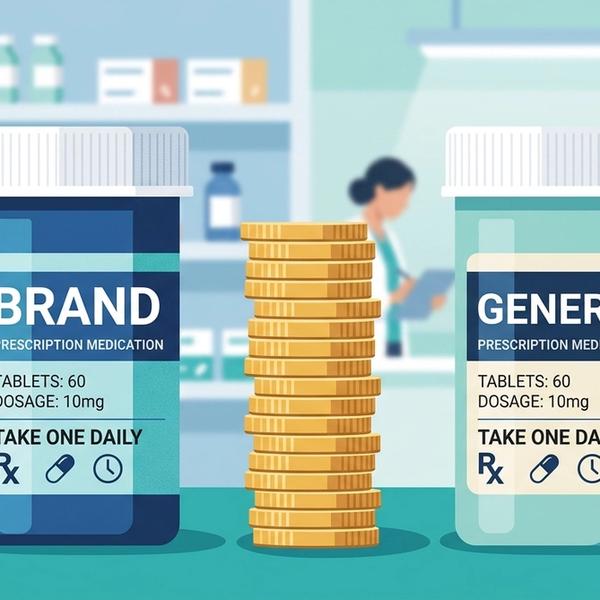
Vraylar Generic 2026: Cariprazine Cost & How to Save

The pharmacy quotes you $1,565 for thirty capsules. You go home, search "Vraylar generic," and every result tells you the same thing: not yet.
That answer is correct. It's also incomplete. The patents behind Vraylar don't all expire on the same day, the FDA's own records point to a later date than most articles cite, and the drug is priced in a way that changes which savings advice actually works.
At a glance
- No FDA-approved generic version of cariprazine is sold in the United States as of August 2026.
- The last Vraylar patent listed in the FDA's Orange Book runs to March 17, 2030 — later than the "2029" figure most sites quote.
- The US cash price is roughly $52 per capsule at every strength, or about $1,566 for a 30-day supply.
- Because pricing is flat per capsule, moving from 1.5 mg to 6 mg does not increase what you pay.
- Cash-pay pricing through CanAmerica Plus runs $200.99 for 30 capsules, about $1,365 less per month.
Is there a generic for Vraylar?
No. The FDA has not approved a generic version of Vraylar, and none is legally sold in the United States.
The active ingredient is cariprazine — that's the generic name people search for when they're trying to find a cheaper version. AbbVie holds the US approval; the compound was discovered by the Hungarian manufacturer Gedeon Richter, which still holds most of the underlying patents. Vraylar first cleared the FDA on September 17, 2015 for schizophrenia and for acute manic or mixed episodes of bipolar I disorder. Bipolar depression followed in 2019, and adjunctive treatment of major depressive disorder in 2022.
Four indications, one manufacturer, no competition. That combination is most of the price story.
When will generic cariprazine be available?
Most articles say 2029. The FDA's Orange Book — the official listing of patents tied to an approved drug — says something more specific, and later.
| Patent | Covers | Expires |
|---|---|---|
| 7,943,621 | Salt forms | Dec 16–20, 2028 (June 2029 with pediatric extension) |
| RE47350 / RE49110 / RE49302 | Immediate-release formulation | July 16, 2029 (Jan 16, 2030 with pediatric extension) |
| 7,737,142 | Cariprazine compound itself | Sept 17, 2029 (March 17, 2030 with pediatric extension) |
The compound patent is the one that matters most, because it covers the molecule rather than a particular formulation. With the six-month pediatric extension applied, it runs to March 17, 2030. The FDA has also granted pediatric exclusivity through June 18, 2029 and a separate new-patient-population exclusivity through December 18, 2028.
So the honest answer to "when will Vraylar go generic" is somewhere between mid-2029 and spring 2030, and 2030 is the safer assumption.
Generic manufacturers have been eligible to challenge these patents since September 2019, and patent-tracking services report multiple abbreviated new drug applications filed along with at least one Paragraph IV challenge and related litigation. Those cases sometimes end in settlements that let a generic enter early. They also sometimes end with the brand holding its full term. Neither outcome is predictable from the outside, which is why planning around a 2029 launch is a gamble and planning around today's prices is not.
Worth knowing: In December 2025, AbbVie added 0.5 mg and 0.75 mg capsules to the Vraylar lineup for a newly approved patient population. New strengths came with a fresh exclusivity clock — one more reason the brand-only window is likely to stretch toward 2030 rather than close in 2029.
What Vraylar costs in 2026
Here's where Vraylar behaves differently from most brand-name drugs, and where a lot of published savings advice falls apart.
| Strength | Quantity | US cash price | Per capsule |
|---|---|---|---|
| 0.5 mg | 30 capsules | $1,565.72 | $52.19 |
| 0.75 mg | 30 capsules | $1,565.72 | $52.19 |
| 1.5 mg | 20 capsules | $1,046.45 | $52.32 |
| 1.5 mg | 30 capsules | $1,565.72 | $52.19 |
| 3 mg | 30 capsules | $1,565.72 | $52.19 |
| 4.5 mg | 30 capsules | $1,565.72 | $52.19 |
| 6 mg | 30 capsules | $1,565.72 | $52.19 |
US cash prices per Drugs.com, August 2026. Retail pricing varies by pharmacy and region.
Every strength costs the same per capsule. A patient stabilized on 6 mg pays exactly what a patient on 0.5 mg pays.
That matters because a common piece of cost advice — ask your doctor about a lower dose — saves you nothing here. It may be clinically right for other reasons. It will not lower your pharmacy bill by a dollar. Splitting capsules isn't an option either; Vraylar is a capsule formulation and shouldn't be opened or divided.
What does change your cost is the quantity you fill and where you fill it.
Why Vraylar is so expensive
Patent protection is the short version. Nobody else can legally make cariprazine in the US, so there's no price competition, and a drug with four approved indications and no substitute holds its price well.
Two other factors compound it. Vraylar is a relatively young drug — a 2015 approval, with the most commercially valuable indication (adjunctive MDD) added only in 2022 — so the manufacturer is still in the window where it recovers development costs. And US drug pricing is negotiated plan by plan rather than set nationally, which leaves cash-paying patients at the top of the price ladder rather than the bottom.
Insurance doesn't reliably solve it. Vraylar sits on most commercial formularies and on Medicare Part D, but plans commonly attach prior authorization or step therapy, meaning you may have to fail on a cheaper antipsychotic before coverage kicks in. And if you haven't met your deductible, you pay the full price anyway.
Cheaper alternatives in the same class
Vraylar is an atypical antipsychotic — a second-generation agent that acts on dopamine D3 and D2 receptors, with an unusual preference for D3, plus serotonin 5-HT1A activity. Several drugs in the same class have been generic for years.
| Medication | US generic | Brand cash price | Generic cash price |
|---|---|---|---|
| Vraylar (cariprazine) | No | $200.99 / 30 caps | — |
| Rexulti (brexpiprazole) | No | $141.99 / 30 tabs | — |
| Abilify (aripiprazole) | Yes | — | $110.99 / 100 tabs |
| Seroquel (quetiapine) | Yes | $27.99 / 60 tabs | $35.99 / 60 tabs |
| Zyprexa (olanzapine) | Yes | $65.99 / 28 tabs | $56.99 / 100 tabs |
| Lamictal (lamotrigine) | Yes | $97.99 / 100 tabs | $56.99 / 100 tabs |
CanAmerica Plus pricing as of August 2026.
Aripiprazole is the closest structural cousin and the most common substitution. At about $1.11 per tablet, a month runs roughly $33. Lurasidone — sold as Latuda — carries the same bipolar depression indication as Vraylar with a lower weight-gain risk in head-to-head metabolic comparisons, though it has to be taken with a meal of at least 350 calories to absorb properly, which is a real adherence problem for some people. Quetiapine and olanzapine are effective and inexpensive, but both carry meaningful sedation and metabolic burden; olanzapine in particular is among the worst offenders for weight gain.
Lamotrigine is a mood stabilizer rather than an antipsychotic. It's useful for preventing depressive episodes in bipolar I and it's cheap, but it requires slow dose titration because of a rare risk of serious rash, and it won't control acute mania or psychotic symptoms.
None of this means a substitution is right for you. Vraylar's D3 preference and its side effect profile are genuinely different, and people who've cycled through three antipsychotics to find one that works have a strong reason not to switch for money alone. Bring the price to your prescriber and let them weigh it against your history — never stop or swap an antipsychotic on your own, since abrupt discontinuation can trigger withdrawal symptoms or relapse.
How to lower what you pay for Vraylar now
Savings tip: Ask about a 90-day prescription instead of monthly refills. Nothing about Vraylar's pricing rewards small fills, and fewer refills means fewer shipping charges and fewer chances to run out mid-titration.
Compare cash-pay pricing against your copay, not against retail. If you're on a high-deductible plan, your insured price early in the year may be the full $1,566. A cash-pay route at $200.99 for 30 capsules is $1,364.73 less per month — about $16,377 over a year. That's the comparison worth running before January, not after.
Check the brand against the generic. This sounds backwards, but it's worth doing. Brand-name Seroquel runs $27.99 for 60 tablets through CanAmerica Plus while generic quetiapine runs $35.99 for the same count. Sourcing and packaging differences can occasionally make the brand the cheaper line item. Look at both.
Don't assume your dose is the lever. Covered above, but it's the single most common piece of misdirected advice on this drug. Your capsule count is what moves the bill.
Ask your prescriber to document a prior authorization properly the first time. If your plan requires step therapy and you've already failed other antipsychotics, that treatment history is what gets Vraylar approved. Incomplete documentation is a frequent reason for denial, and appeals cost you weeks.
About "generic cariprazine" sold online
Search "Vraylar generic" and you'll eventually land on a site offering generic cariprazine at a fraction of the price. Treat that as a warning sign.
Cariprazine generics do exist in some countries where the patents were never filed or have already lapsed. But no version has been reviewed or approved by the FDA, and there is no legitimate US supply chain for generic cariprazine right now. The FDA and Drugs.com both flag illegal generic Vraylar as a known counterfeit risk.
If you're buying medication online, the basics still apply: a real pharmacy requires a valid prescription, is licensed and verifiable, and will connect you to a pharmacist. An operation selling an unapproved generic without a prescription meets none of those.
The bottom line
There's no generic Vraylar in 2026, and the FDA's patent records point to 2030 rather than 2029 before that changes. Until then the meaningful choices are two: pay less for the same drug through cash-pay pricing, or talk with your prescriber about whether a generic in the same class fits your history.
If you're currently paying full retail, compare that $1,566 against cash-pay pricing before your next refill. And if cost is the reason you've been stretching capsules or skipping doses, tell your prescriber — that's a clinical problem, not just a financial one, and it changes what they'd recommend.
Frequently asked questions
What is the generic name for Vraylar?
Cariprazine. It's the active ingredient in every Vraylar capsule. Seeing the generic name listed doesn't mean a generic product is available — it only identifies the molecule.
When will Vraylar go generic?
Somewhere between mid-2029 and March 2030, based on the patents and exclusivities listed in the FDA's Orange Book. The compound patent with its pediatric extension runs to March 17, 2030. Patent litigation could shift that earlier, but there's no confirmed launch date.
Is there a cheaper alternative to Vraylar?
Several atypical antipsychotics are available as generics, including aripiprazole, quetiapine, olanzapine, and lurasidone. They work differently and have different side effect profiles, so whether any of them is a reasonable substitute depends on your diagnosis and what you've already tried. That's a conversation for your prescriber.
Does a lower dose of Vraylar cost less?
No. Vraylar is priced at roughly the same amount per capsule across all strengths, from 0.5 mg to 6 mg. Reducing your dose won't reduce your pharmacy bill — only reducing the number of capsules would, and that isn't something to do on your own.
Why does Vraylar cost over $1,500 a month?
It's a brand-only drug with no generic competition, protected by patents through at least 2029. With no substitute product on the US market, there's nothing pushing the price down.
This article is for informational purposes only and does not constitute medical advice. Always consult with a qualified healthcare provider for diagnosis and treatment. Pricing information is current as of the publication date but may change. Verify pricing directly before making purchasing decisions.